Ebook Download Principles of Molecular Photochemistry: An Introduction
By reading this publication, you will certainly see from the various other way of thinking. Yeah, open mind is one that is needed when checking out the book. You may likewise have to choose what info as well as lesson that works for you or hazardous. But actually, this Principles Of Molecular Photochemistry: An Introduction deal you no damage. It serves not just the demands of many individuals to live, but likewise added features that will certainly keep you to offer perfection.
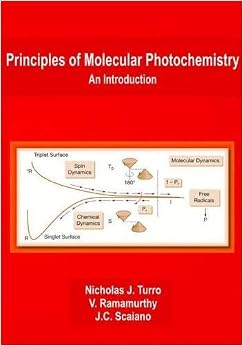
Principles of Molecular Photochemistry: An Introduction

Ebook Download Principles of Molecular Photochemistry: An Introduction
Come follow us every day to know exactly what books upgraded every day. You understand, guides that we offer daily will certainly be upgraded. As well as currently, we will certainly give you the brand-new book that can be recommendation. You could choose Principles Of Molecular Photochemistry: An Introduction as the book to check out currently. Why should be this book? This is just one of the latest book collections to upgrade in this website. Guide is likewise advised because of the solid factors that make countless people love to use as reading product.
We offer below due to the fact that it will certainly be so very easy for you to access the net solution. As in this brand-new period, much technology is sophistically supplied by attaching to the internet. No any type of problems to deal with, just for this particular day, you could truly remember that the book is the most effective publication for you. We offer the best below to check out. After making a decision just how your feeling will be, you can enjoy to visit the web link as well as get guide.
As understood, to complete this publication, you might not need to get it simultaneously in a day. Doing the activities along the day may make you really feel so bored. If you attempt to require reading, you may favor to do other entertaining tasks. However, one of principles we desire you to have this publication is that it will certainly not make you feel bored. Feeling burnt out when checking out will be just unless you don't like the book. Principles Of Molecular Photochemistry: An Introduction actually offers what everybody wants.
Even the documents of the book is in soft data, it doesn't indicate that the web content is various. It only distinguishes in the form of the book provided. When you have the soft data of Principles Of Molecular Photochemistry: An Introduction, you can extremely easy conserving this data into some particular devices. The computer system, gizmo, as well as laptop computers appropriate adequate to conserve the book. So, anywhere you are, you can be readily available to establish the time to check out.
This book develops photochemical and photophysical concepts from a small set of familiar principles. Derived in part from Nick Turro s best-selling text for three decades Modern Molecular Photochemistry this updated primer introduces an initial paradigm that relates the photon and a reactant molecular structure to photochemistry through the structure and dynamics of electronically excited states, reactive intermediates and products. The same paradigm is readily adapted to incorporate the photon and a reactant molecular structure to photophysics. The book provides brilliantly clear descriptions in pictorial terms that can be readily understood by the student and applied to systems of interest. This text will be of interest to not only practicing photochemists and their students, but also to biological scientists, polymer scientists, material scientists and nanoscientists who use photochemistry and photophysics in their research and teaching.
Your recently viewed items and featured recommendations
›
View or edit your browsing history
After viewing product detail pages, look here to find an easy way to navigate back to pages you are interested in.
Product details
Paperback: 530 pages
Publisher: University Science Books; 1st edition (October 30, 2008)
Language: English
ISBN-10: 1891389572
ISBN-13: 978-1891389573
Product Dimensions:
7 x 1.1 x 9.9 inches
Shipping Weight: 2 pounds (View shipping rates and policies)
Average Customer Review:
3.8 out of 5 stars
7 customer reviews
Amazon Best Sellers Rank:
#389,553 in Books (See Top 100 in Books)
This book is absolutely impossible to read. Turro just repeats the same points over and over and over. All the information in Chapters one and two are repeated again and again and AGAIN for the rest of the book in an apparent attempt to make a document that can be turned into a hardcover book and sold for nearly $100. This book is literally the most useless book I have ever purchased. I also purchased the longer version of this book by Turro and had the same experience!My instructor forced his students to buy this book. He was a Turro student and admitted to being a reviewer of this book, so it was obvious that he had some financial stake in us purchasing the book and wanted to increase his own prestige by trying to increase the popularity of Turro. Ultimately the course wasn't useful and the book even less so.Now if I was going to write this review in Turro style I would repeat what I just said seven more times to make this comment long, boring, and undigestable. Look to other sources to try to learn Photochemistry and skip this atrocity.
Simply the best in photochemistry and photophysics textbooks, like its precedent "Modern molecular photochemistry".Dr. Turro is a great teacher as well as a great scientist. I listened to his speech a few years ago and he can really explain abstract ideas in an easy way for you. Generations have benefited from his previous book. This new one has exactly that quality and tradition to remain the best in the business. It rearranges the chapters and adds some of the effect of spin and electron transfer on photochemistry.I recommend also his organic photochemistry lecture videos to the readers.
Useful book, has a few typos and errors. To be expected. Good Price with nice information. Diagrams are helpful and theory is well explained.
This is an excellent book of a team of prominent scientists. The book considers both basics of the science and recent achivements in modern photochemistry. I strobgly recommend it to the readers.
Very clear description of concepts. This is one of my favorite books.
A good introduction.
Turro's latest version of the photochemistry book is an outgrowth of his lifelong passion for assimilating, subliming and distilling his thoughts spanning tens of thousands of hours on this topic . The hall mark of Turro's writing style - clarity of thought, inimitable presentation style, addressing the reader directly, student friendly exposition of photochemical events, obvious but hidden allusions and suggestions for further thought, and penchant for integrating the latest in his science - is clearly manifested in this latest book.I am not amazed at this extraordinary feat emanating from a pioneering expert who chose to coauthor this book with two other excellent photochemists, probably to penetrate and perpetuate the impact of his pedagogic acumen to posterity. I have been a close follower of his photochemistry classics starting from his prototype like precursor to the present endeavor. Let me proudly recall my tryst with Turro's writings with my discovery of his first book on photochemistry (Molecular Photochemistry, Benjamin, New York, 1965) in the summer of 1976 at the sumptuous library of the Bhabha Atomic Research Centre in Mumbai (where I spent most of my non-experimental hours in that institution during my best youthful days), when I had to initiate my Ph.D. program in the organic photochemistry of laser dyes. Scanning the high energy chemistry shelf at that library, I chose Turro's book with an instant spark of spontaneity, which I never regretted in terms of the gains it entailed in expanding the horizon with minimum effort and maximum efficiency, although some of my then colleagues did not agree with my opinion, which I ever expressed freely being an ardent believer of democratic principles. Eversince, I have been following his later improvements on this topic including the 1978 book [Modern Molecular Photochemistry, University Science Press].The evolutionary transformations of this topic have been clearly reflected in this book, which is not merely a revision of his old books, but is marked by a novel and superior reorganization skill and definite improvement of the topics. The present book, subtitled as an introduction, encompasses the ground realities of photochemical principles that envelop the photochemical and photophysical processes. These principles are adorned with an extraordinary treatment of quantum mechanical basis. Modern chemical approach of quantum mechanics commences with the enunciation of axiomatic designations and generalizations of quantum mechanical concepts instead of initiating the topics with tortuous mathematical paths. This book dwells upon another level of simplification of quantum mechanical thoughts, which will be acceptable both to chemistry majors who have finished physical chemistry primers covering quantum mechanics, and bioscience majors who may want to master the photobiological scenario. The wave functions are divided into orbital, nuclear, and spin components, and they are explained confining all the underlying principles necessary in the context of the book without defying comprehension.The principles are annotated with simple pictures and models that serve to illustrate the related concepts, which impart pedagogical ease. Such a trend pervades the whole book extending up to the final chapters that elaborate on the photochemical principles of organic reactions, and concepts on energy transfers.The book is accentuated with electron and nuclear spin concepts, in a scale proportionate to the extreme emerging importance of spintronics in modern material science and nanotechnology, which physicists and mathematicians may consider as an aid to appreciate the physical significance and extra-dimensions of their own work.Linguistically, the book bears the repeated stamp of special terms such as paradigms and exemplars, which carry more weight and meaning in the context of the treatment of the book. Each time they show up, we are reminded of the elevated status of these terms as distinct from mere models and examples, thanks to the exemplary influence of giants like Kuhn and Popper on Turro's genius. There are, I believe, deliberate evasion of usual acronym for Highest Occupied Molecular Orbital by choosing the short form HO from ethical considerations to circumvent the unavoidable connotations linked to the use of the more familiar short form. In general, the language is perennially clear and clever to dismiss ambiguities.This book has a unique position in the firmament of photochemical teaching, and as a reference work for experts and researchers. I have gone through, at various stages of my career, at least seven introductory books on photochemistry, of which Turro's book stands out owing to its positive attributes as a clear representation of photochemistry, as a supplementary source of information for chemists in general, as a structurally significant intellectual product, and as complementary resources for high energy radiation chemistry workers.Inevitably, a book with a high concentration on basic principles should be followed by a sequel elaborating on the application aspects, which, in the context of photochemistry, I guess, should be an admixture of organic reactions, molecular recognition, nanochemistry , photobiology inclusive of chemical biological aspects of inorganic chemistry, and, of course, frontiers of material science. Scientific community, I am sure, will tune for such a development!Joy T. Kunjappu, D.Sc., Ph.D.Adjunct ProfessorBrooklyn College of CUNYNew York
Principles of Molecular Photochemistry: An Introduction PDF
Principles of Molecular Photochemistry: An Introduction EPub
Principles of Molecular Photochemistry: An Introduction Doc
Principles of Molecular Photochemistry: An Introduction iBooks
Principles of Molecular Photochemistry: An Introduction rtf
Principles of Molecular Photochemistry: An Introduction Mobipocket
Principles of Molecular Photochemistry: An Introduction Kindle